
CRM Marketing Manager: Ecommerce…
A CRM job title can describe campaign strategy at one…
Breaking into product management can feel confusing when job descriptions mix strategy, delivery, and analytics. Junior roles often sound similar, yet the ownership expected can differ sharply. An Associate Product Manager (APM) is an early-career product professional who helps identify customer problems, define workable solutions, and coordinate delivery with design and engineering. The position usually carries narrower decision-making authority than a product manager role, although the boundary varies by organisation.
An APM commonly owns a small feature, part of a customer journey, or a defined problem under an experienced product leader. Ownership means clarifying the desired outcome, bringing evidence to decisions, and keeping colleagues aligned. It does not necessarily mean approving budgets, setting company strategy, or dictating technical solutions.
The work often includes interviewing users, writing requirements, reviewing support feedback, prioritising opportunities, and tracking product performance. An APM may propose what to build and why, while designers decide how interactions should work and engineers choose the implementation.
At one company, an associate may lead releases independently; elsewhere, the same title means supporting a senior manager. Ask about decision rights, mentoring, and the size of the problem area before judging a vacancy.
Product work begins by identifying a problem worth solving rather than accepting every feature request. For example, suppose new users abandon an account setup screen. An APM would first examine where people drop off and speak with users to understand why. A high abandonment rate identifies a symptom, not automatically its cause.
Next comes a hypothesis: perhaps an unclear field prevents completion. The team can compare possible changes by expected value, effort, and risk, then agree on success measures. A requirement records the problem, constraints, and acceptance criteria.
During delivery, the APM answers questions and reviews trade-offs. After launch, the team reviews adoption, task completion, complaints, and unintended effects. If the results disappoint, the next step may be revising the idea rather than adding more features.
Customer discovery means asking open questions, listening for patterns, and separating what people request from what they actually struggle to achieve. Prioritisation means choosing among competing needs and explaining why a promising idea can still wait.
Analytical fluency matters, but advanced statistics is not always necessary. Start with spreadsheets, basic product metrics, and questions about data quality. Learn the difference between a conversion rate and an absolute number, and avoid presenting correlation as proof that a change caused an improvement.
Clear writing is equally important. A concise problem statement, a readable specification, and a decision record can prevent costly misunderstandings. Collaboration requires listening to engineering, design, sales, and support.
Strong evidence comes from explaining how you investigated a problem, selected an approach, measured progress, and responded to uncertainty.
Build one small case study around an accessible product or workflow. Identify a specific user, observe friction, collect a modest amount of feedback, sketch competing solutions, and define a metric that would show improvement. Label assumptions as assumptions; do not claim that an untested redesign increased results.
For applications, connect previous work to the role. Customer support can demonstrate insight into recurring pain points; operations can show process improvement; design or software experience can show delivery collaboration. In interviews, explain decisions and alternatives rather than reciting frameworks.
A product manager generally has broader responsibility for product outcomes, prioritisation, and trade-offs. An Associate Product Manager often works within a smaller scope and receives more guidance.
A project manager primarily coordinates execution, resources, schedules, and dependencies against an agreed plan. A product owner, especially in Scrum environments, focuses on maximizing product value and managing the product backlog, though organisations interpret that accountability differently.
Career progression is not automatic. Moving into broader product ownership usually requires evidence of sound prioritisation, independent problem solving, and measurable contributions, alongside an available role. A good entry-level position offers feedback, exposure to users, and room to make decisions safely.
Scope varies by employer; verify ownership and mentoring before accepting a role.
Start with customer problems, then test solutions against agreed measures.
Writing, prioritisation, research, and basic data skills reinforce one another.
Show your reasoning through a modest, honest case study rather than inflated claims.
The role suits people who enjoy ambiguous problems, evidence-based decisions, and cross-functional work. It can be frustrating if you expect sole control over design, engineering, and delivery schedules. Look for a team that gives junior colleagues real problems, clear decision boundaries, and constructive feedback. Use this Ebtechsol guide to identify one skill gap and plan a small project that demonstrates how you would address it.
Requirements differ. Some employers value degrees or internships, while others accept evidence from operations, research, design, or technical work. The useful common thread is the ability to frame problems, collaborate, and explain decisions clearly.
Usually not. Technical literacy helps with feasibility discussions and dependencies, but writing production code is rarely the core responsibility. Learn to ask good engineering questions and understand basic system constraints instead.
Yes. Translate experience into product-relevant examples, such as identifying recurring customer issues or improving a workflow. A credible transition story explains what you did, why you chose it, and what changed.
Start with spreadsheets, a simple backlog tracker, a document editor, and an analytics interface. Tool names matter less than being able to analyse evidence, communicate requirements, and keep decisions accessible to colleagues.
Learn the product, users, and team responsibilities. Review support requests, observe meetings, ask about success metrics, and understand existing commitments before proposing large changes. Early listening reduces expensive assumptions.
Evaluation often considers problem understanding, collaboration, quality of decisions, delivery contribution, and learning. Junior employees may not control all outcome metrics.
No. Product management emphasises which problems to solve and why; project management focuses on organising execution. Both involve coordination, and a small team may combine duties, but their primary accountabilities differ.
A shipped product helps but is not mandatory for every application. A case study can show research, alternatives, and measurement plans. Make clear which actions were real and which were proposed.
Common traps include treating stakeholder requests as confirmed user needs, writing vague requirements, and declaring success from one metric. Clarify the underlying problem, document trade-offs, and check for unintended effects.
Many move toward product manager positions with broader ownership, but progression varies. Others specialise in product operations, research, growth, or technical product work. Choose according to your strengths and interests.

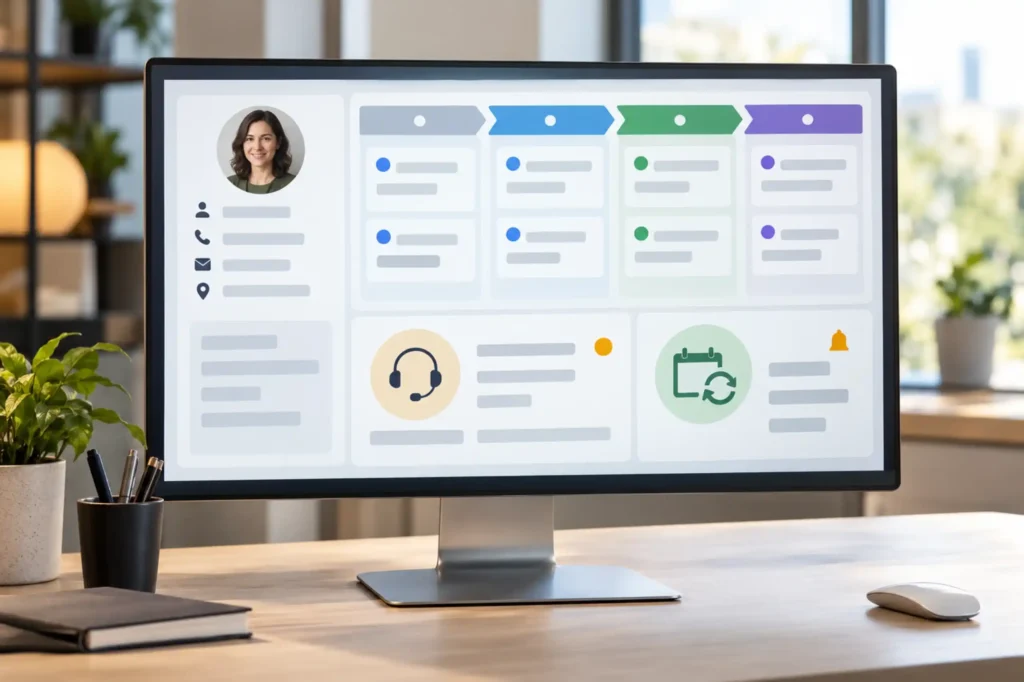

Client details scattered across inboxes, spreadsheets, and chat threads cost…

EB Technical Solutions FZE /
EB TECHNICAL SOLUTIONS (PVT.) LIMITED
Copyright © 2026 EBTECHSOL

Ask me anything about AI Automation, API Integration, SaaS Development or our Services.
Just get in touch via text or microphone.