
Procurement Automation Process: Six…
A purchase request can sit unanswered while a supplier waits…
The same dependency upgrade can land on several teams’ backlogs. Each team then has to work out what might break and how to check the result. For repeated changes, AWS Transform custom uses AI agents to update application code, libraries and frameworks using instructions, documentation and examples supplied by developers.
The sensible starting point is a small pilot. It should show whether the tool can produce changes your team can review, test and maintain with a reasonable amount of effort.
Version upgrades, API migrations, framework changes and organisation-specific refactoring fall within the service’s documented scope. Their complexity varies considerably. Updating one dependency offers limited evidence about the effort involved in replacing an entire framework.
AWS-managed transformations provide prepared definitions for common tasks, including Java, Python, Node.js and AWS software development kit (SDK) upgrades. Teams can also create custom definitions for their own libraries, coding patterns and requirements.
Before creating a definition, check whether a managed option covers the intended change. Evaluate either route against the same criteria: compatibility, preserved behaviour, test results and the work needed to correct the output.
A transformation definition gives the agent instructions for a particular change. You can create and refine one through plain language, migration notes and example code.
A useful definition identifies:
Imagine a team replacing an internal notification client. The replacement reports failed deliveries differently. Its transformation instructions need to preserve retries, message identifiers and audit records while explaining how to handle the new responses.
Include examples of successful and failed deliveries. A reviewer can then compare the output with a clear requirement instead of guessing what the migration was supposed to achieve.
AWS describes a process of defining the transformation, testing it through a pilot, scaling execution and reviewing results. The pilot helps establish the likely effort and service usage before broader adoption.
Build the application and run its existing tests before changing anything. Record known failures and keep the starting commit available for comparison and recovery. If the baseline is unstable, resolve that uncertainty before using it to judge the upgrade.
The command-line interface (CLI) requires a Git repository, suitable AWS permissions and a supported environment. Check the configured AWS Region as part of setup because availability is region-specific.
Include a straightforward service and another with unusual configuration or awkward dependencies. Testing only the cleanest repository leaves important exceptions unexplored.
For the notification example, a web service and a scheduled job make useful comparison cases. Both may use the same client while handling delivery failures differently.
Supply explicit build and test commands so the agent receives concrete feedback about the changes. The checks need to exercise the behaviour affected by the upgrade.
For notification delivery, that means checking retries, duplicate prevention and failure reporting. Compilation alone leaves these questions unanswered. Where possible, run focused integration tests against a controlled test environment.
Read the code diff alongside the test results and transformation report. AWS provides a report describing the outcome and can recommend further action when validation is incomplete.
Pay close attention to unrelated edits, weakened test assertions, changed error handling and configuration updates that affect deployment. If a test disappeared or became easier to pass, establish the reason before approving the change.
A notification service could compile successfully while losing the identifier needed to investigate failed deliveries. A targeted check should confirm that the identifier remains available throughout the relevant workflow.
The pilot record needs to distinguish accepted changes, manual corrections and unresolved issues. Give each outstanding issue an owner before planning the next batch.
A wider rollout of AWS Transform custom should be based on the total effort needed to accept a change. Track execution time, developer review, manual corrections and unresolved defects. Compare similar repositories before estimating the wider programme.
The service extracts lessons from execution and developer feedback. These lessons are specific to a transformation, and teams can review and manage them.
Check that learned guidance fits the repositories where it will be reused. A rule that works for a scheduled job may need qualification before it applies to a customer-facing service.
Expand in manageable batches once results are consistent. Repeated exceptions call for a clearer definition, a narrower scope or separate treatment for repositories with different requirements.
Useful automation leaves the team with code it can understand and maintain. A pilot provides evidence for expanding the work, narrowing the scope or reconsidering the approach.
Use this Ebtechsol guide to agree the scope, checks and owner of one pilot before planning a wider rollout.
No. AWS directs COBOL and mainframe transformation needs to AWS Transform for Mainframe. Choose the capability that matches the workload and the intended change.
Yes. The additionalPlanContext configuration parameter lets you supply project-specific guidance when running an AWS-managed transformation. The underlying managed definition remains unchanged.
Establish checks for its most important behaviour first. Limited test coverage makes regressions harder to identify and increases the manual verification needed to evaluate the pilot.
Yes. Standard Git commands let developers inspect transformation changes. Compare the resulting code with the starting commit to understand the complete set of edits.
Yes. Interactive conversational mode allows developers to interrupt execution and provide feedback. This helps clarify unexpected cases while testing and refining a transformation.
Yes. Archiving a lesson stops the system applying it to future runs. Archived lessons can be restored or permanently deleted when they are no longer useful.
Definitions are account-specific. To use a definition in another AWS account, publish it separately there and configure the permissions required by the people running it.
No. The CLI can use standard AWS credentials. The AWS Transform web application requires IAM Identity Center, together with the appropriate access configuration.
Base the estimate on the change’s complexity, available examples and validation effort. Include time for investigation, corrections and review before using the pilot to forecast a larger project.
Compare their dependencies, configuration and code patterns. Clarify the requirements or separate incompatible cases, then retest the affected repositories before extending the rollout.
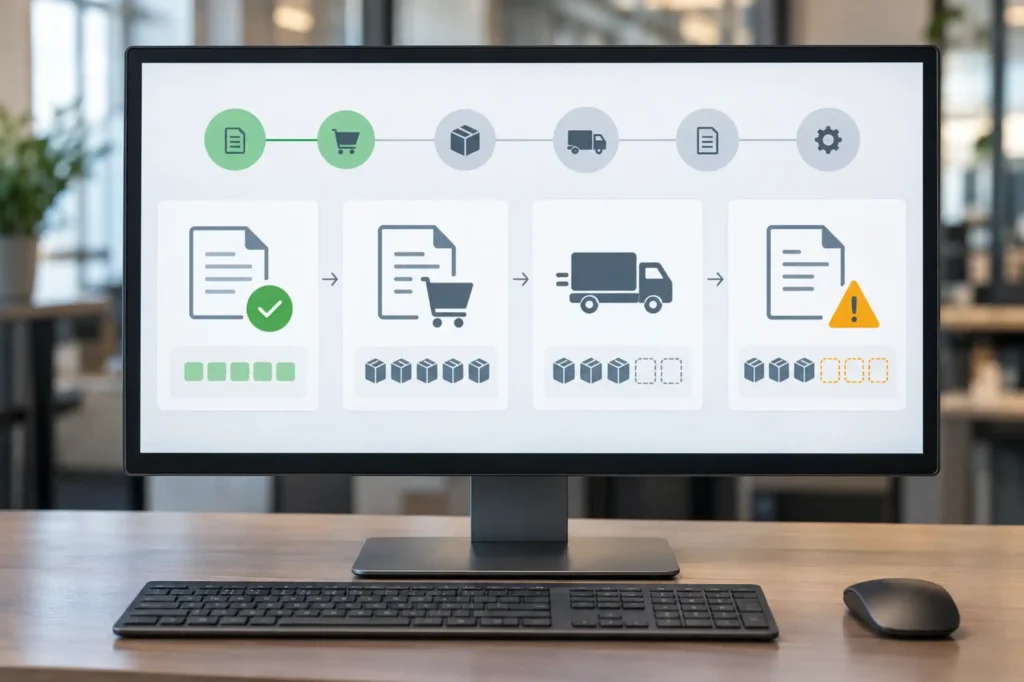
A purchase request can sit unanswered while a supplier waits…

Late deliveries can disrupt work even when a purchase looked…
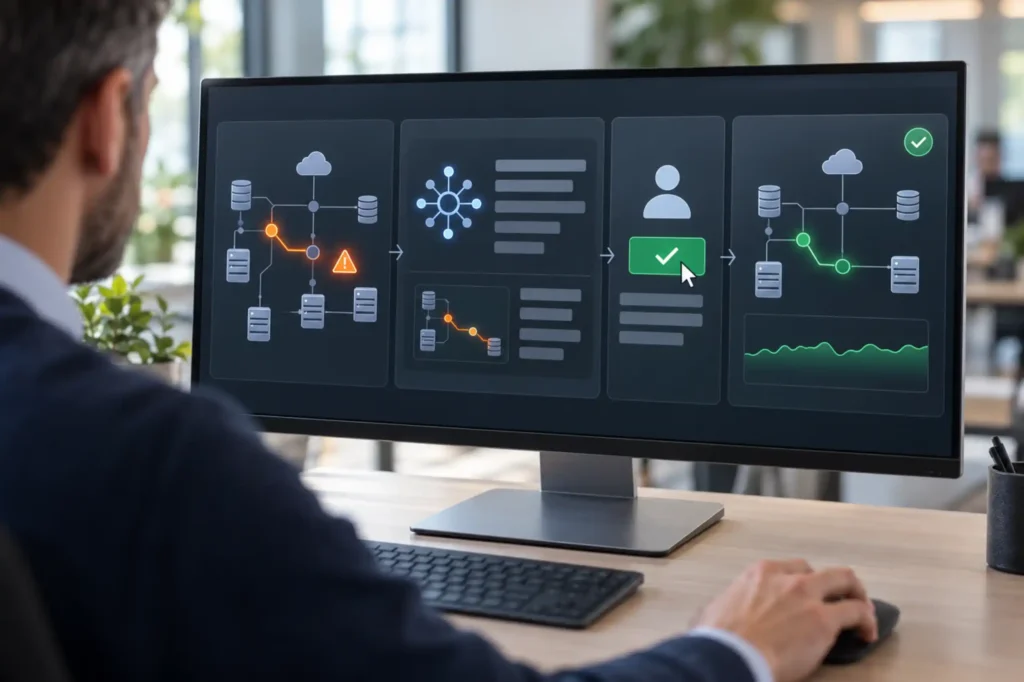
An invoice workflow can fail because of a weak integration,…

EB Technical Solutions FZE /
EB TECHNICAL SOLUTIONS (PVT.) LIMITED
Copyright © 2026 EBTECHSOL

Ask me anything about AI Automation, API Integration, SaaS Development or our Services.
Just get in touch via text or microphone.